One button for a wall of glass no chain was ever going to reach
Motors, sensors and app control for the stairwell voids and double-volume windows that Kanonberg's newer builds run to, front and back.
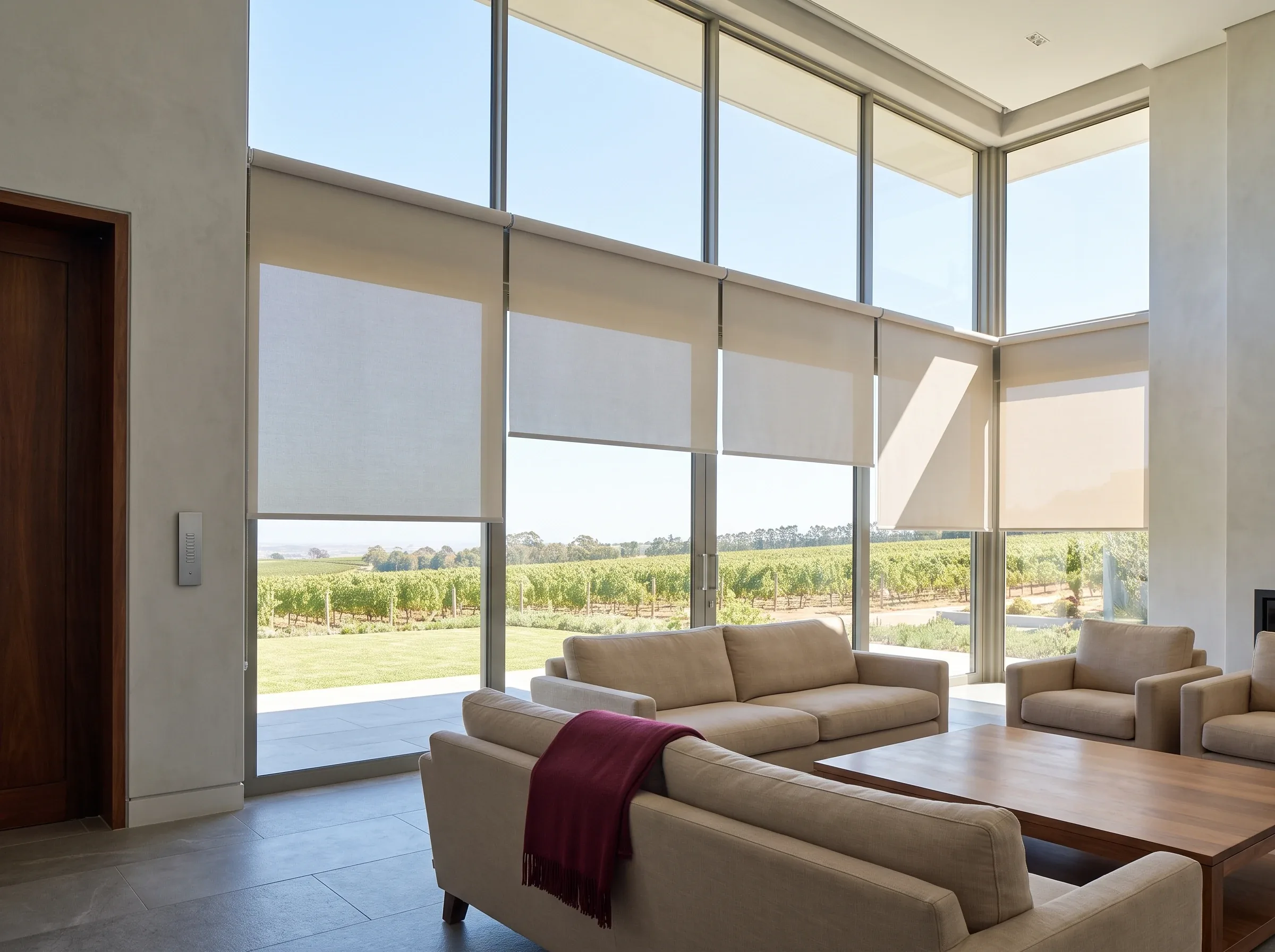
Where a hand chain simply stops being an option
Double-volume glass above a staircase or a great room, tall glazing running two storeys, ceiling-recessed blind boxes built into a new architectural design — this estate's newer construction produces exactly the kind of openings a chain or wand can't reach, let alone operate safely every day. Motorisation isn't the premium upsell on these; it's the only workable spec, and we treat it that way at the measure rather than pricing it as an add-on afterthought.
Sun and wind sensors, sold on what they actually protect
A sun sensor drops shading automatically on a west-facing elevation before the room overheats — useful, but not safety-critical. A wind sensor on an exterior product is a different story on this ridge. An awning or external venetian caught extended when the Cape Doctor gusts through can be damaged outright; the sensor retracts it automatically, whether or not anyone's home to notice the sky changing. On exposed exterior fittings here, we specify the wind sensor as standard, not optional.
Battery or wired — the honest trade-off
Rechargeable battery motors retrofit onto existing blinds with no wiring, charged every few months from a USB-style charger — the practical choice on an established home. New builds and major renovations are better served by wired 220V motors: permanent, no charging routine, and the stronger option for large or heavy exterior systems. Both control the same way — handset, app, schedule, or sensor — and we'll size the right option to the specific opening rather than defaulting to one across an entire order.
The wind sensor pays for itself the first time it retracts an awning on its own, twenty minutes before anyone in the house notices the south-easter has picked up.
On-site measure, KanonbergWhat automation adds to the figure
Motorisation does not carry a price by itself: the motor exists only as part of a product. The whole automated range sits inside R2,500 to R7,500 per square metre once installed. A motorised roller on an ordinary interior window sits at the bottom of that band; an exterior system engineered to stand a Cape Doctor afternoon sits at the top.
Sun sensors, wind sensors, wall keypads and hubs are quoted as separate lines rather than folded into a square-metre rate, so you can decide window by window what is worth automating. Small openings carry a minimum charge. Every number here is orientation only — the binding figure follows the free measure, once we know how many motors there are, what each drives and how each will be powered.
- Rechargeable battery motors for retrofit, wired 220V for new builds
- Wind-sensor auto-retract, standard on exterior products
- Sun sensors, schedules and app control by lifestyle, not just tech
- No dangling chains — the most child-safe operation available
- Multi-blind scenes wired at installation for whole walls of glass
Got a stairwell void or a wall of glass?
We measure at your home for nothing, price every window in writing, and leave the decision entirely with you.