Roller blinds measured for glass that was built for the view
Sunscreen, blockout and double-roller fabrics, made to the width of Kanonberg's sliding terrace doors and farmhouse-style windows — not a standard bracket size.
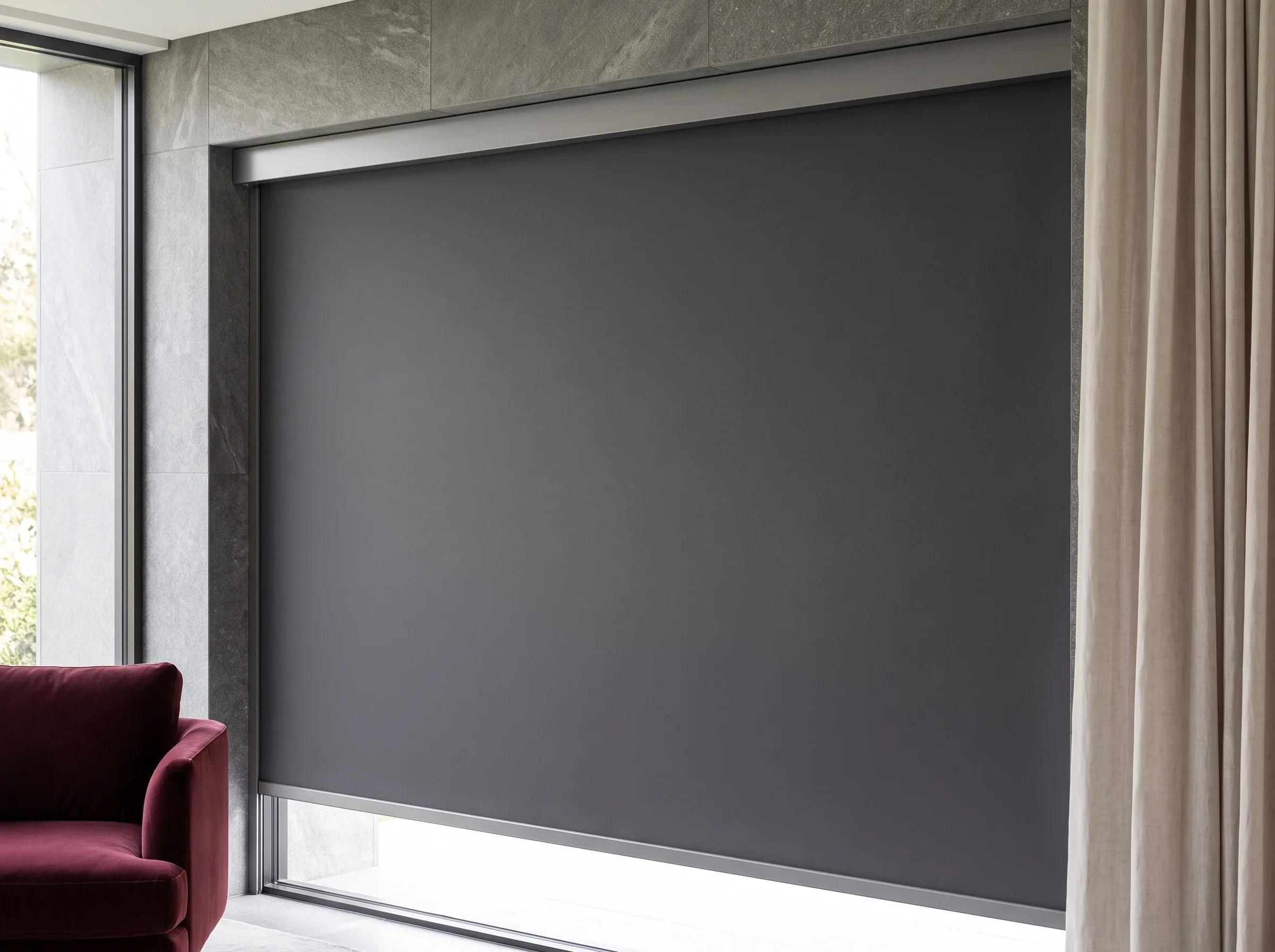
Sunscreen for vineyard glare, not street glare
Most sunscreen recommendations in this city assume a suburban street: cars, pavement, reflected light off a neighbour's wall. Kanonberg's glass usually faces the opposite — open vineyard rows and ridge country, with genuinely fewer windbreaks between the house and the horizon than a built-up suburb gets. On a west-facing living room wall that means the low, late sun arrives with nothing to soften it first. A 3% or 5% openness sunscreen is the standard start point on that kind of elevation, cutting the worst of the glare and heat while keeping the rows of vines visible rather than turning them into a grey smudge behind a heavier mesh.
Blockout, and the double-roller answer for a farmhouse-style bedroom
A bedroom with a dawn-facing window on an open ridge gets first light hard and early — no city smog or tree canopy in the way. A single blockout roller handles that on its own. Where the room also wants the vineyard view kept through the day, a double roller pairs a blockout fabric with a sunscreen on the same bracket, so the room reads bright and open through the afternoon and goes properly dark at bedtime, without swapping blinds or living with a gap either way.
Wide terrace doors: one blind, a split, or motorised
A single roller fabric runs cleanly to around three metres before a join line starts to show. Kanonberg's sliding terrace doors and open-plan glass walls regularly exceed that, so we either split the width with a central join or run the blinds as a motorised, linked set so no single chain is doing the work of a whole wall of glass. Chain and cord tensioners are fitted as standard on anything corded, and a face-fixed cassette is usually the tidier option on the tall, uninterrupted glazing common in this estate's newer builds.
The terrace door is nearly always the one that gets measured twice on this ridge — once for the width, once for how much wind it's likely to take on a Cape Doctor afternoon.
On-site measure, KanonbergWhat a roller blind costs on this ridge
Guides per square metre, installed. Without a motor — blockout, sunscreen or light-filter cloth on a chain or spring — reckon on R1,000 to R1,600 per square metre. A standard blockout shade keeps you near the floor of it; a 3% sunscreen in a wide fabric, or a double bracket carrying both cloths on a single window, sits high in it.
Motorised, it works out at R2,500 to R3,800 the square metre — the motor itself, whichever control you pick, and the setup. On a wide terrace door that is usually the practical answer rather than an indulgence. Small windows carry a minimum charge, since the brackets, tube and installer time barely change with size, and the figure that binds is the per-window one written after the free measure.
- Sunscreen mesh, 3%, 5% or 10% openness
- Blockout fabric for farmhouse-style bedrooms and early sun
- Double roller (day/night) on one bracket
- Chain, spring or motorised control
- Split or motorised-linked options for wide terrace doors
Ready to measure your windows?
We measure at your home for nothing, price every window in writing, and leave the decision entirely with you.